sackett.ai
  • About Us
  • Offerings
  • Industries
  • Case Studies
  • Approach
  • Solutions
sackett.ai
Background Image

Canopy cover monitoring

Affordable, decision-ready monitoring and reporting.

We can't afford airborne surveys, can you help?

That question was posed to us by a customer tasked with canopy cover management. Airborne surveys are completely out of the customer's price range, leaving them with almost no visibility of canopy in their area.

Consistent monitoring over time and space.

Current market offerings focus on spatial resolution, but don't meet requirements for time-series monitoring, and comparison of different locations. So, we chose data sources that consistently capture data over time and space.

Cost-effective and powerful.

By integrating multiple data sources, we've created a cost-effective and powerful system. We use multiple 'modes' of data collection including light detection and ranging (LiDAR), visible and infrared imagery collected from space, air and on the ground.
Case study: Wonthaggi, Victoria, Australia

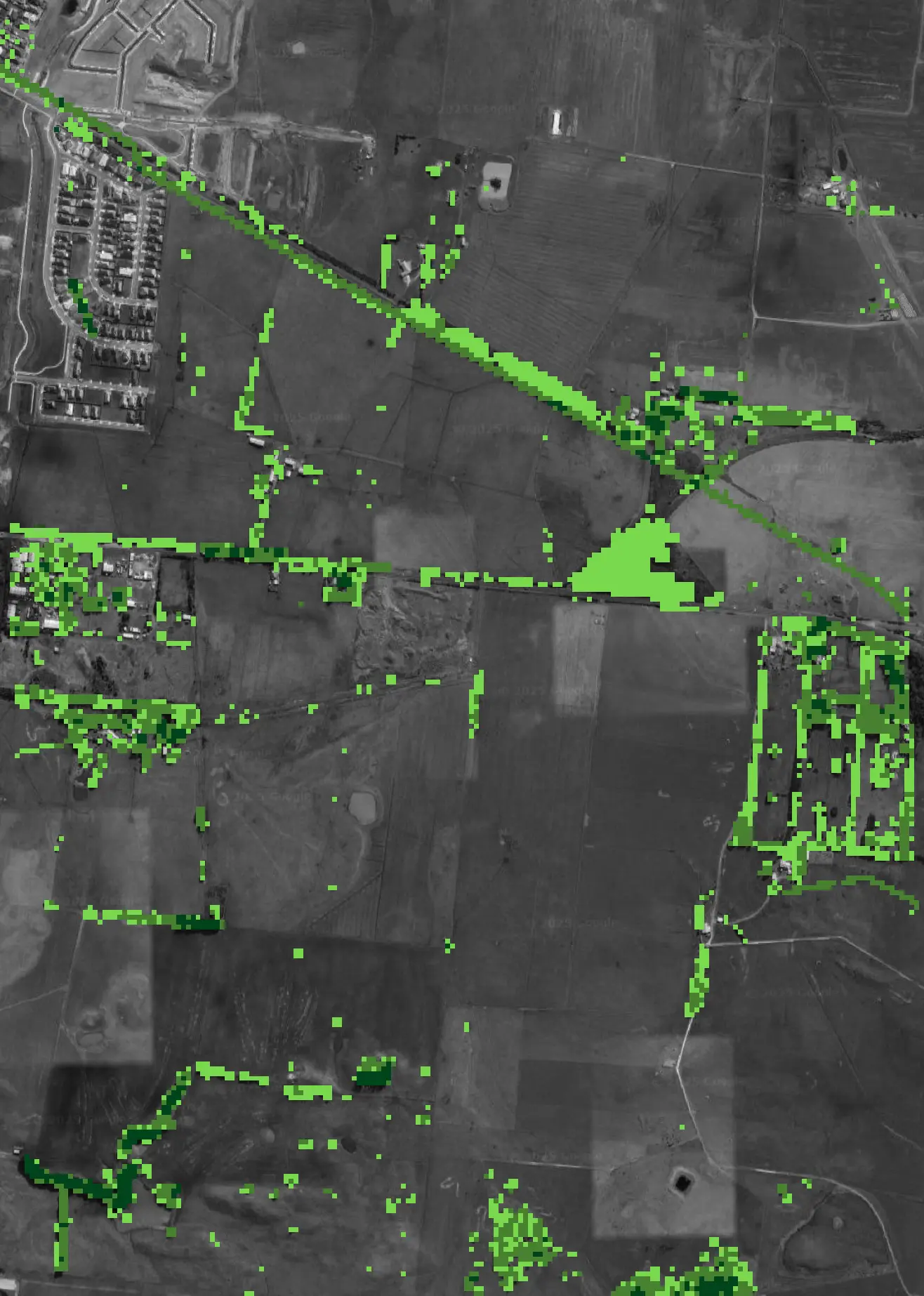
To illustrate our system in action, we're sharing a snapshot of our approach - this time, focusing on vegetation taller than 10 meters. We start by querying the system to highlight all features exceeding this height. Unsurprisingly, the majority of these features are trees.

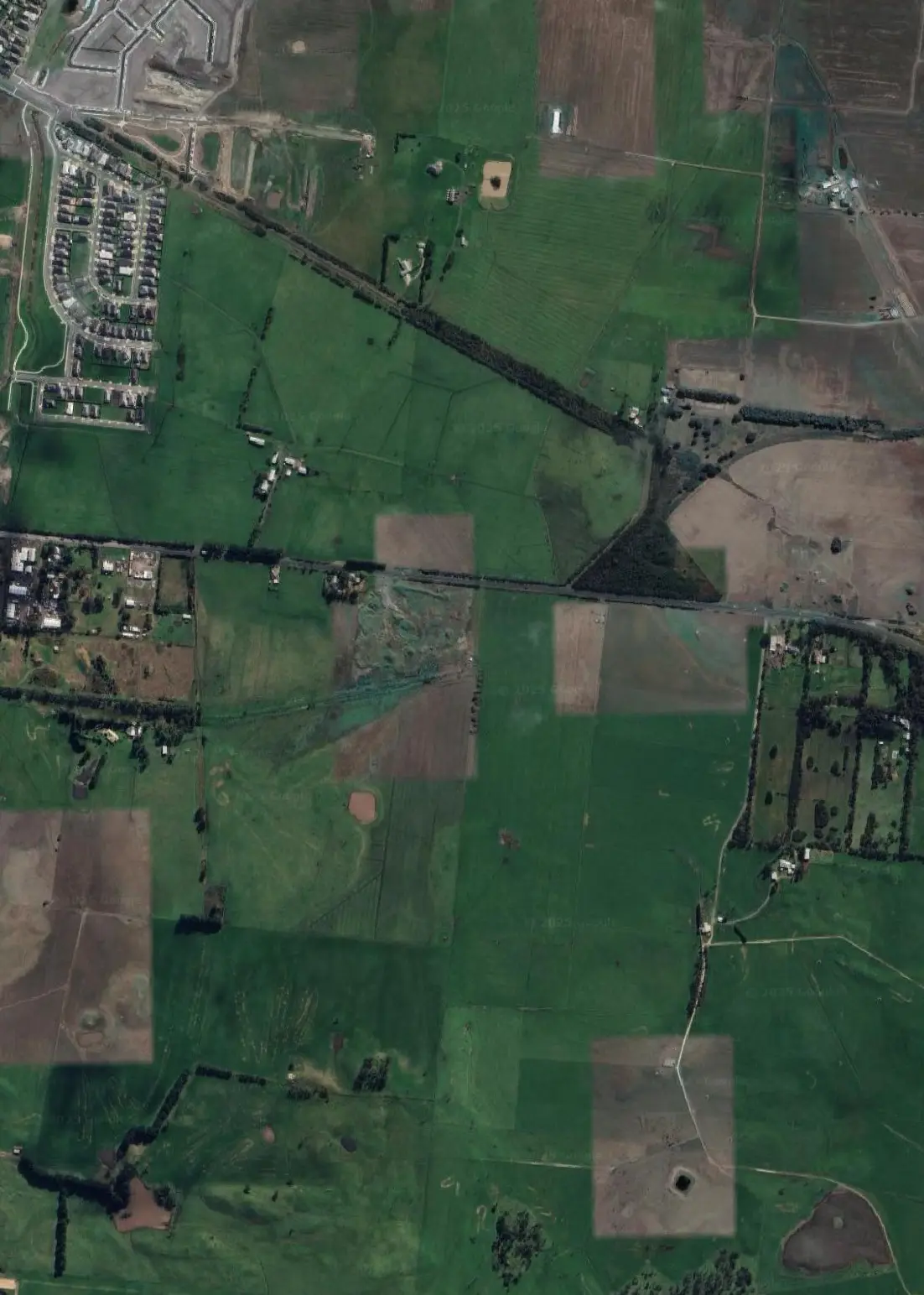
The figure displays a satellite view near Wonthaggi, Victoria, Australia, with bright green highlighting objects over 10 meters tall (as measured in 2018).

Even before filtering out non-canopy elements like buildings, it's clear that most bright green areas correspond to taller vegetation. Before calculating percentage canopy cover, we run additional processing steps to improve accuracy - such as excluding pixels that don't overlap with vegetation.

Our approach ensures results are tailored to your needs. By fine-tuning performance based on your requirements, we deliver a highly cost-effective solution: you only pay for the level of detail you actually need.

To find out about other geospatial solutions we can offer - talk with us.

Background ImageBackground Image
Colour satellite image by Google.
Canopy cover (>10 metres) map by sackett.ai superimposed over greyscale satellite image by Google.

Case study: Wonthaggi, Victoria, Australia

To illustrate our system in action, we're sharing a snapshot of our approach - this time, focusing on vegetation taller than 10 meters. We start by querying the system to highlight all features exceeding this height. Unsurprisingly, the majority of these features are trees.

The figure displays a satellite view near Wonthaggi, Victoria, Australia, with bright green highlighting objects over 10 meters tall (as measured in 2018).

Even before filtering out non-canopy elements like buildings, it's clear that most bright green areas correspond to taller vegetation. Before calculating percentage canopy cover, we run additional processing steps to improve accuracy - such as excluding pixels that don't overlap with vegetation.

Our approach ensures results are tailored to your needs. By fine-tuning performance based on your requirements, we deliver a highly cost-effective solution: you only pay for the level of detail you actually need.

To find out about other geospatial solutions we can offer - talk with us.

Background ImageBackground Image
Colour satellite image by Google.
Canopy cover (>10 metres) map by sackett.ai superimposed over greyscale satellite image by Google.

[email protected]